Kissflow Explained: Simplifying Workflow Automation for Modern Teams
Introduction to Kissflow
In today’s fast-paced digital world, organizations are constantly looking for ways to streamline operations, reduce manual work, and improve productivity. One platform that has gained significant attention in this space is Kissflow. It is a cloud-based low-code and no-code platform designed to help businesses automate workflows, manage processes, and build custom applications without requiring deep technical expertise.
Kissflow is widely used by organizations of all sizes, from small businesses to large enterprises, to digitize their operations and eliminate inefficiencies. With its intuitive interface and powerful automation capabilities, it empowers both technical and non-technical users to create solutions tailored to their business needs.
What is Kissflow?
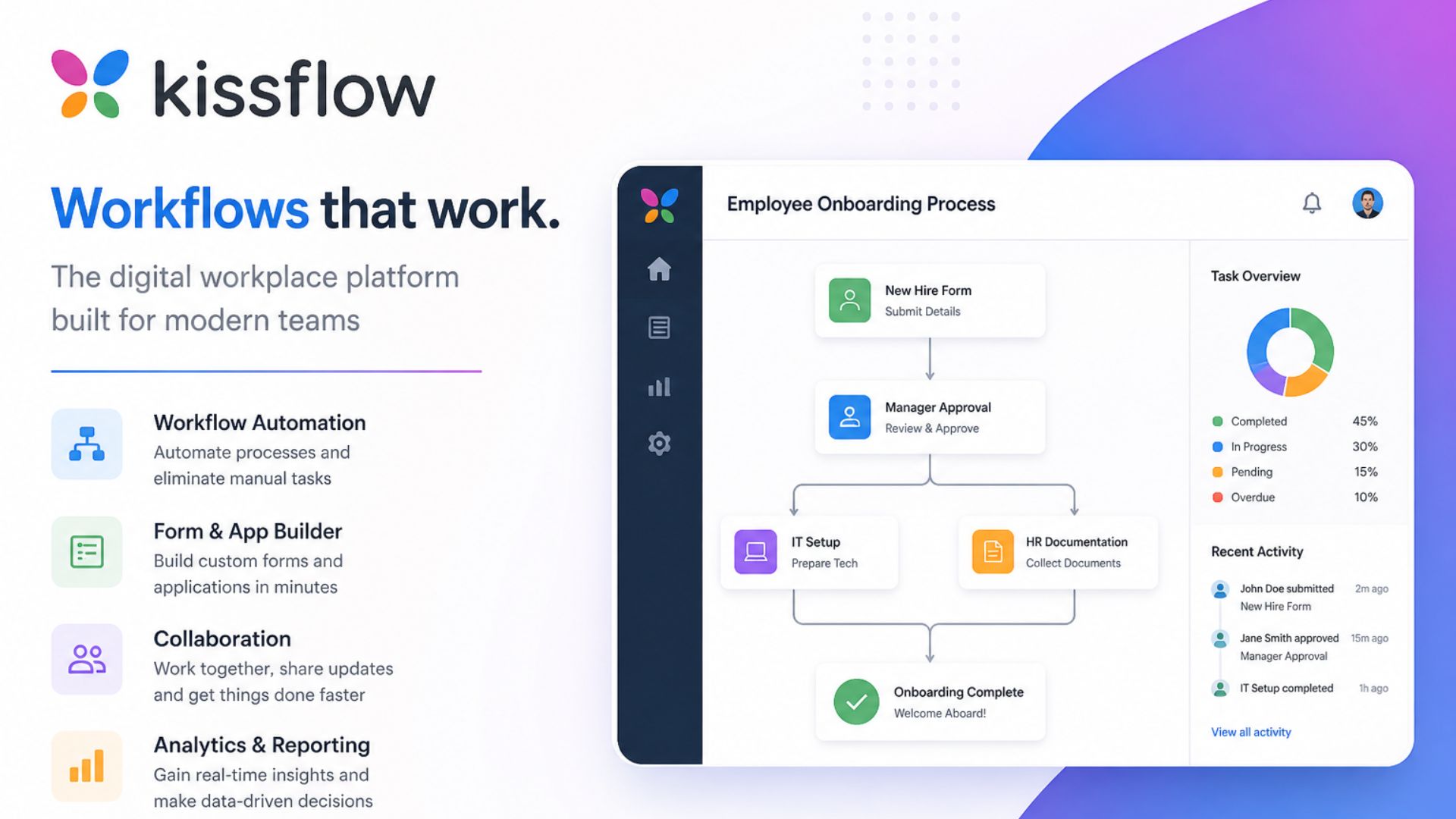
Kissflow is essentially a unified digital workplace platform that combines workflow automation, business process management (BPM), and application development in one system. It allows companies to design, execute, and monitor processes using a visual, drag-and-drop interface.
Unlike traditional software development, which requires coding skills and long development cycles, Kissflow enables “citizen developers”—non-technical users—to build applications quickly. This democratization of development helps organizations reduce reliance on IT teams and accelerate innovation.
According to industry insights, Kissflow is particularly useful for managing structured processes such as approvals, requests, and task tracking across departments like HR, finance, procurement, and IT.
Key Features of Kissflow
1. Workflow Automation
One of the core features of Kissflow is its ability to automate repetitive tasks and workflows. Businesses can create automated approval processes, assign tasks, and set rules that trigger actions based on conditions.
For example, an expense approval workflow can automatically route requests to managers, notify stakeholders, and track progress in real time. This reduces delays and minimizes human errors.
2. Low-Code/No-Code Application Development
Kissflow provides tools for building custom applications without writing code. Users can design forms, workflows, and dashboards using a drag-and-drop interface.
This feature is especially valuable for organizations that want to build internal tools quickly without hiring developers or outsourcing projects.
3. Process Management (BPM)
The platform supports end-to-end business process management. Users can map processes, define rules, and monitor performance through analytics and reporting tools.
This helps organizations identify bottlenecks and continuously improve their workflows.
4. Collaboration Tools
Kissflow promotes collaboration by allowing teams to work together on tasks, share updates, and communicate within the platform. It ensures that all stakeholders are aligned and informed.
5. Integration Capabilities
Modern businesses rely on multiple tools and systems. Kissflow integrates with various third-party applications, enabling seamless data flow between systems.
This reduces the need for manual data entry and ensures consistency across platforms.
6. Analytics and Reportin
The platform provides real-time insights into workflows and processes. Managers can track performance metrics, identify inefficiencies, and make data-driven decisions.
Benefits of Using Kissflow
Increased Efficiency
By automating repetitive tasks, Kissflow reduces manual work and speeds up processes. This allows employees to focus on more strategic activities.
Cost Savings
Low-code platforms like Kissflow eliminate the need for expensive custom development and reduce IT overhead. They also shorten development time significantly.
Faster Deployment
Applications and workflows can be built and deployed quickly, enabling businesses to respond to changes faster.
Improved Transparency
With real-time tracking and reporting, organizations gain better visibility into their operations.
Scalability
Kissflow is designed to grow with businesses. Companies can start small and scale their usage as their needs evolve.
Use Cases of Kissflow
Kissflow is highly versatile and can be applied across various business functions:
- Human Resources: Employee onboarding, leave management, and performance tracking
- Finance: Expense approvals, invoice processing, and budget tracking
- Procurement: Purchase requests, vendor management, and approval workflows
- IT: Ticket management, change requests, and incident tracking
- Operations: Task management and process optimization
Its flexibility makes it suitable for organizations looking to digitize multiple departments using a single platform.
Pricing Overview
Kissflow offers flexible pricing plans based on business needs. The basic plan typically starts at around $1,500 to $2,500 per month, depending on features and user limits, while enterprise plans are customized for larger organizations.
The pricing structure generally includes:
- Workflow automation tools
- Form and app builders
- Reporting and analytics
- Integration capabilities
Enterprise plans often provide additional features such as advanced analytics, unlimited applications, and enhanced security.
Advantages and Limitations
Advantages
- Easy-to-use interface
- No coding required
- Comprehensive workflow automation
- Suitable for multiple departments
- Quick implementation
Limitations
- Can be expensive for smaller teams
- Limited customization for highly complex needs
- Some integrations may require additional tools
These factors should be considered when deciding whether Kissflow is the right solution for your organization.
Kissflow vs Competitors
Kissflow competes with platforms like Monday.com, Smartsheet, and Microsoft Power Automate. While these tools also offer automation and project management features, Kissflow stands out for its strong focus on business process management and structured workflows.However, it may be more expensive than general work management tools, making it better suited for organizations with complex process automation needs.
Conclusion
Kissflow is a powerful low-code platform that simplifies workflow automation and application development. By enabling both technical and non-technical users to build solutions, it helps organizations improve efficiency, reduce costs, and accelerate digital transformation.
Its combination of automation, process management, and collaboration tools makes it an all-in-one solution for modern businesses. While it may not be the best fit for every organization, especially those with limited budgets or highly specialized requirements, it remains a strong choice for companies seeking to streamline operations and enhance productivity.
In a world where agility and efficiency are critical, platforms like Kissflow are playing a key role in shaping the future of work.